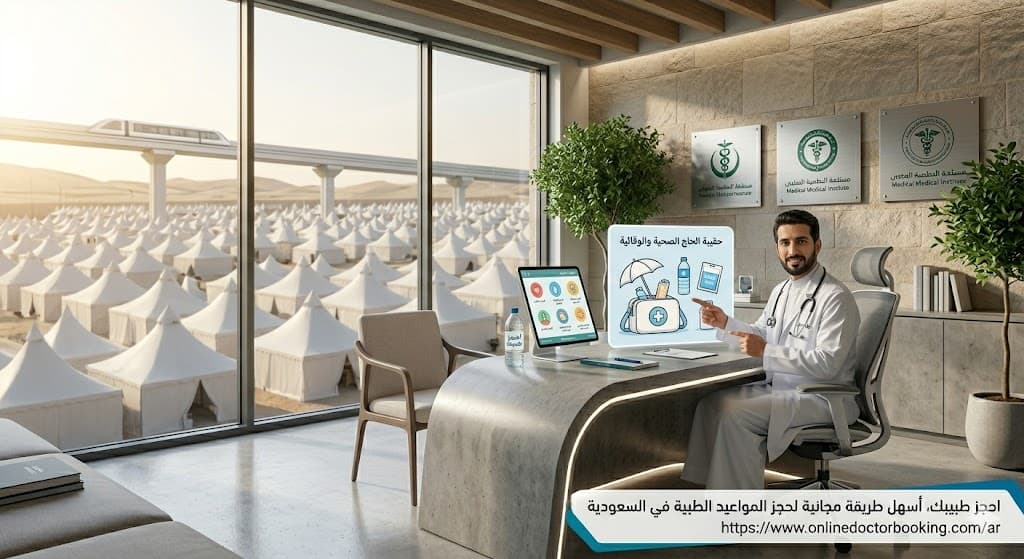
Heat Exhaustion During Hajj: Clinical Symptoms, Triggers, and Medical Prevention for Pilgrim
A comprehensive medical guide from Online Doctor Booking detailing heatstroke and heat exhaustion prevention tips during the Hajj season, with practical lifestyle updates for pilgrim safety.
Heat exhaustion and heatstroke are among the most common and critical health challenges encountered by pilgrims during the Hajj season in the holy sites, primarily driven by high ambient temperatures and intense physical exertion during rituals. Medical centers and family medicine clinics receive these clinical cases frequently, making awareness of preventive measures essential for completing the pilgrimage safely.
1. Clinical Signs and Early Warning Indicators
Heat exhaustion develops when the body fails to cool itself properly due to excessive loss of vital fluids and essential salts through heavy sweating. Early clinical indicators include dizziness, acute headache, profuse sweating accompanied by cold or clammy skin, nausea, and muscular cramps or general lethargy. If these signs are left untreated, the condition can rapidly escalate into a life-threatening heatstroke characterized by a sharp rise in core body temperature and delirium.
2. Environmental Triggers at the Holy Sites
These thermoregulatory disorders are caused by continuous, direct exposure to sunlight for extended intervals, especially during peak hours (from 11:00 AM to 4:00 PM). Severe crowded conditions, non-stop physical tasks like Sa'ee and Tawaf without sufficient rest, and neglecting regular hydration accelerate acute dehydration and compromise blood circulation.
3. Clinical Management and Prevention Guidelines
Behavioral modification serves as a pilgrim's primary shield in the holy places. Physicians strongly advise carrying a UV-protected umbrella at all times to shield against direct rays, and drinking plenty of fluids and water consistently (at least 3 to 4 liters daily) without waiting to feel thirsty. Pilgrims, particularly the elderly and individuals with chronic ailments, should avoid outdoor exposure during peak heat hours, prioritize resting periods in shaded or air-conditioned tents, and immediately consult their medical mission upon feeling unwell.
Adhering to official medical guidelines and mindfully managing physical exertion remains your definitive gateway toward a safe, spiritually rewarding, and healthy Hajj journey.
Preparing for Hajj and looking for personalized preventive medical advice?
Book the Best Family Medicine and General Doctor for Free via the Platform